
Medical Cold Storage: The Core Guarantee of Pharmaceutical Cold Chain Safety 1
As a key infrastructure with precise temperature control, full-process traceability and standardized operation, medical cold storage safeguards the stability and safety of cold-chain pharmaceuticals throughout circulation, serving as an indispensable core link in the modern pharmaceutical warehousing system.
1. Definition of Medical Cold Storage
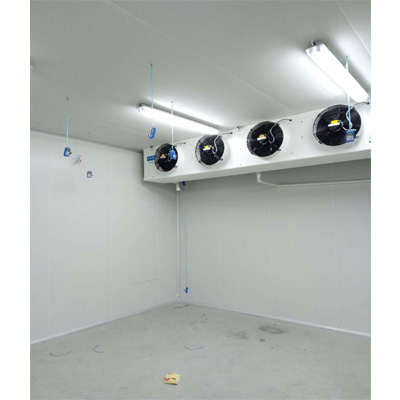
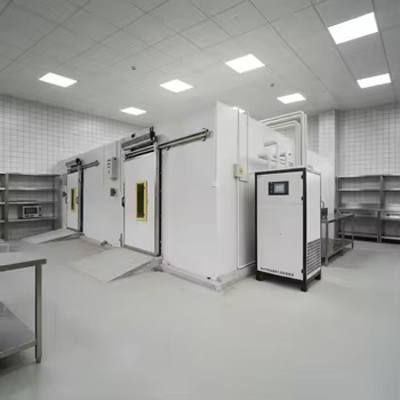
Medical cold storage refers to a constant-temperature professional warehousing facility specially used for the storage, maintenance and turnover of cold-chain medicines, designed and operated in strict accordance with the Good Supply Practice (GSP) standards.
Different from ordinary fresh-keeping cold storage, it is equipped with professional functions including precise temperature control, uninterrupted power supply, real-time monitoring, traceable data recording and dual-system backup, exclusively serving pharmaceutical enterprises, hospitals and medical distribution institutions.
The standard storage temperature for conventional medical cold storage is 2℃ to 8℃, suitable for cold-chain prescription drugs, biological products, vaccines, serum, enzyme preparations, probiotics and special medical devices. Low-temperature and ultra-low-temperature cold storage are applied to store special laboratory reagents and biological samples.
2. Core Construction Standards for Medical Cold Storage
2.1 Precise Constant Temperature with Minimal Fluctuation
Ordinary cold storage suffers from large and frequent temperature fluctuations, which fail to meet pharmaceutical storage requirements.
Medical cold storage strictly implements the following standards:
- Stable temperature maintained at 2℃–8℃ all year round
- Real-time collection and automatic recording of temperature and humidity data
- Ultra-low temperature fluctuation to avoid pharmaceutical deterioration caused by repeated temperature changes
Stable constant temperature is the fundamental condition to prevent pharmaceutical denaturation, precipitation and inactivation.
2.2 Dual-unit and Dual-power Supply to Avoid Shutdown Risks
Temperature rise caused by power outage is strictly prohibited for pharmaceutical storage. Qualified medical cold storage must adopt multiple safety guarantees:
- Dual refrigeration units with automatic switching in case of single-unit failure
- Dual power supply of municipal electricity and emergency backup power
- Automatic alarm for power failure and equipment faults to prevent massive pharmaceutical scrapping
2.3 24-hour Intelligent Monitoring and Full Traceability
As a key supervised facility in the pharmaceutical industry, medical cold storage supports full inquiry, traceability and accountability:
- 24/7 automatic temperature and humidity monitoring system
- Automatic data storage for no less than 5 years
- Triple alarm reminders via SMS, phone and cloud platform for abnormal temperatures
- Docking with drug supervision platforms for full lifecycle traceability
2.4 Professional Enclosure Structure with Moisture Proof and Mildew Resistance
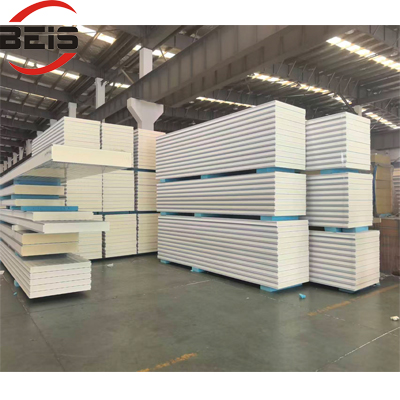
The cold storage adopts high-density polyurethane insulation panels, featuring high airtightness and excellent thermal insulation performance. It effectively prevents cold loss, internal condensation and humidity, avoiding dampness, mildew and damage of pharmaceutical outer packages.
The interior environment is dead-angle-free, odorless and easy to clean, fully complying with medical and health cleanliness standards.
3. Main Application Scenarios of Medical Cold Storage
3.1 Pharmaceutical Wholesale Enterprises
Used for centralized storage, sorting and outbound distribution of large quantities of biological drugs and cold-chain preparations, serving as essential GSP-certified facilities for pharmaceutical circulation enterprises.
3.2 Hospital Pharmacies and Preparation Rooms
Medium and small-sized medical cold storage is deployed in outpatient and inpatient departments and clinical laboratories for daily cold-chain medication and emergency reagent storage.
3.3 Community Health Service Centers and Clinics
Applied for compliant storage of a small number of vaccines, insulin and conventional cold-chain medicines.
3.4 Disease Prevention and Control Institutions & Vaccination Centers
Special vaccine cold storage ensures standardized low-temperature storage of national immunization vaccines.
3.5 Biomedical Laboratories and Scientific Research Institutions
Used for low-temperature preservation of biological samples, bacterial strains, cell reagents and experimental consumables.