
Basic knowledge of explosion-proof cold storage 2
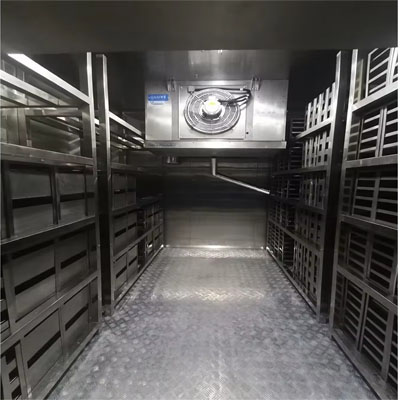
1. Explosion‑Proof Refrigeration System: Custom explosion‑proof refrigeration units, evaporators, and fans with hermetically sealed compressors and motors. No sparks or overheating occur during operation; temperature can be precisely regulated down to ‑40°C.
2. Explosion‑Proof Electrical System: All interior lighting, switches, sockets, temperature controllers, and sensors are intrinsically safe explosion‑proof models. Cables are routed through sealed explosion‑proof conduits to prevent short circuits and electric sparks.
3. Safety Monitoring & Linkage System: High‑sensitivity gas detectors monitor gas concentration in real time. In case of leakage, the system triggers audible/visual alarms, activates forced ventilation, and cuts power automatically. Static grounding eliminates static electricity buildup.
4. Storage Enclosure Protection: Flame‑retardant, anti‑static polyurethane insulation panels provide fire resistance, leakage prevention, and excellent airtightness. Pressure relief devices ensure safety under extreme conditions.
5. Main Application Scenarios
As specialized safety‑focused cold storage, it is essential across high‑risk industries:
1. Chemical Industry: Storage of ethanol, methanol, volatile solvents, resins, and flammable liquid additives.
2. Pharmaceutical & Biomedical Industry: Low‑temperature storage of flammable pharmaceutical reagents, lab samples, alcohol disinfectants, and biological preparations.
3. Daily Chemical Industry: Storage of high‑concentration essential oils, fragrances, and volatile raw materials.
4. Electronics & New Energy Materials: Storage of lithium‑ion battery electrolyte, photosensitive materials, and energy‑storage materials.
5. Research Laboratories: Specialized cold storage for universities and research institutions storing low‑temperature flammable experimental reagents.
It is available in fixed large‑scale cold storage, integrated small‑to‑medium units, and container‑type mobile explosion‑proof cold storage for flexible temporary use in labs and construction sites.
6. Key Operation & Maintenance Guidelines
Safety relies not only on design and construction but also on standardized daily management:
1. Regular Equipment Inspection: Check explosion‑proof electrical components, gas detectors, ventilation, and alarms monthly; conduct annual professional calibration to ensure compliance.
2. Standardized Storage: Store goods matching the explosion‑proof grade strictly; prohibit over‑grade hazardous materials; keep goods partitioned to avoid leakage accumulation.
3. Prohibited Improper Operations: No unauthorized wiring or non‑explosion‑proof equipment replacement; no open flames or flammable debris inside.
4. Regular Ventilation & Dehumidification: Maintain proper ventilation to reduce gas concentration and humidity, preventing equipment aging and static buildup.
7. Industry Development Trends
With stricter industrial safety standards, demand for safer high‑risk cold‑chain storage continues to rise. Explosion‑proof cold storage is evolving toward intelligence, energy efficiency, high adaptability, and integration. Smart systems with IoT enable remote real‑time monitoring of temperature, gas concentration, and equipment status, with automatic early warning and linkage response. New flame‑retardant insulation materials and energy‑saving explosion‑proof units reduce power consumption while maintaining safety.
Conclusion
Breaking the safety limitations of ordinary cold storage, explosion‑proof cold storage solves the storage challenges of flammable and explosive low‑temperature materials and builds a solid safety barrier for high‑risk industrial production and scientific research. Amid refined and standardized industrial safety management, standardized, compliant, and intelligent explosion‑proof cold storage has become an irreplaceable core facility in high‑risk cold‑chain systems, supporting safe, stable, and efficient industrial cold‑chain development.